
The most dangerous moment in any New Jersey car accident claim does not happen in court. It happens within 48 hours of the crash, when the other driver’s insurance company calls and asks you one simple question: “Can we record a quick statement?”
You are not legally required to say yes. In fact, giving that recorded statement is one of the costliest mistakes NJ accident victims make — and insurance adjusters are specifically trained to get you to make it before you realize what is happening.
This guide explains exactly what adjusters are doing when they call, why New Jersey law does not obligate you to cooperate with the other driver’s insurer, and precisely what to say to end the call without damaging your claim.
Why Adjusters Call Within 48 Hours — It Is Not a Coincidence

Insurance adjusters are not calling to help you. They represent the other driver’s carrier, and their job is to minimize what the company pays out on your claim. The 48-hour window is strategic.
In the first two days after a collision, you are likely still in shock, have not yet spoken to an attorney, may not have a full medical picture of your injuries, and — critically — you have not yet had time to review evidence, obtain the police report, or think carefully about how the accident unfolded. Adjusters know this. They count on your instinct to be polite, your desire to “get this resolved quickly,” and your uncertainty about what you are and are not allowed to say.
What adjusters also know is that New Jersey follows a modified comparative negligence rule under N.J.S.A. 2A:15-5.1. Under this statute, if you are found more than 50% at fault for the accident, you recover nothing — regardless of how badly you were injured. Even a finding of partial fault reduces your compensation dollar-for-dollar. A $100,000 claim drops to $70,000 the moment an adjuster convinces a claims reviewer you were 30% responsible.
This is why every question they ask is aimed at extracting an admission — however small — that you share some blame. A recorded statement hands them that ammunition, locked in your own voice, before you have had a chance to consult a New Jersey car accident lawyer.
What You Are — and Are Not — Legally Required to Do
There is a critical distinction that adjusters rarely volunteer:
- Your own insurer: Most New Jersey auto policies contain a “cooperation clause” that requires you to communicate with your own carrier. However, even this does not mean you must provide a recorded statement. You have the right to consult an attorney before doing so.
- The other driver’s insurer: You have no legal obligation whatsoever to speak with them, answer their questions, or provide any statement — recorded or otherwise.
New Jersey is not a state that forces accident victims to submit to opposing insurance company interrogations. Politely declining a recorded statement is not obstructing a claim. It is exercising a right that exists precisely to protect you.
You should promptly report the accident to your own insurer. But that conversation is different from consenting to a formal recorded interview with the at-fault driver’s carrier. Never conflate the two.
The Six Tactics Adjusters Use — and What They Are Really Asking
Adjusters are trained professionals. They do not open with “Admit fault.” Instead, they build a picture piece by piece using language designed to sound routine. Here is how the most common tactics map to their real objective:
| What They Say | What They Mean | Why It Hurts You |
|---|---|---|
| “How are you feeling today?” | Get you to say you’re “fine” or “okay.” | Used later to minimize injury severity. |
| “Can you just walk me through what happened?” | Get a spontaneous narrative before you’ve reviewed evidence. | Memory gaps under shock become “inconsistencies.” |
| “Did you have a clear view of the intersection?” | Introduce the possibility that you were distracted or inattentive. | Any hesitation or “I’m not sure” assigns partial fault to you. |
| “How fast were you going?” | Establish a speed figure, then compare to posted limits. | Even a slight overestimate becomes evidence of speeding. |
| “We just want to resolve this quickly for you.” | Create urgency and discourage you from seeking legal counsel. | Quick resolutions almost always mean underpaid claims. |
| “This is just routine — we require it.” | Imply you have no choice. | False. You are not required to comply. |
Exactly What to Say When the Adjuster Calls
You do not need to be hostile or rude. You simply need to be clear and brief. Here is a word-for-word script you can use:
“Thank you for calling. I was involved in an accident and I understand you are calling on behalf of [the other driver’s] insurance company. I am not going to provide a recorded statement at this time. Please send any correspondence in writing to my attorney, or — if I have not yet retained one — directly to me in writing. My name is [your name] and you can reach me at [your address or email]. I will not be answering any further questions today.”
Then end the call. You do not owe them an explanation. You do not need to justify your decision. Every additional word is a potential liability.
If They Push Back
“I understand you believe this is required. I am advised that I am not legally obligated to provide a recorded statement to a third-party insurer. I am happy to cooperate through written communication or through my attorney. This is my final position on this call.”
If They Call Again
Once you have declined, every subsequent call is handled the same way: “I have previously declined to provide a recorded statement. Please direct all further communication in writing.” Then hang up. Document every call — date, time, name of the adjuster, and what was said.
What CAN Happen If You Give the Statement
Consider a straightforward scenario: you are rear-ended at a red light on Route 9 in Freehold. Clearly not your fault. But during the recorded call, the adjuster asks casually, “Were you texting?” You say, “No — well, I had just looked at my phone a second earlier, but I was stopped.” The adjuster now has a recorded admission that your phone was in use moments before impact. Under New Jersey’s comparative negligence framework, that statement alone can be used to attribute a percentage of fault to you — and reduce your recovery accordingly.
Statements given immediately after accidents are also factually unreliable. The shock of a collision affects memory. You may underestimate how fast you were going, forget the exact sequence of events, or describe injuries as “not that bad” before you have seen a doctor. Once recorded, those statements are locked in the claim file and will resurface months later — sometimes years later — at exactly the wrong moment.
What You Should Do in the First 48 Hours Instead
Declining a recorded statement is not the same as doing nothing. The first 48 hours are critical for building a strong claim. Here is what to focus on:
- Seek medical care immediately. Even if you feel “okay,” injuries like whiplash, concussions, and internal trauma often present symptoms days later. A same-day medical visit creates a documented link between the crash and your injuries. See our guide to common car accident injuries in NJ for what to watch for.
- Notify your own insurer. Report the accident to your own carrier promptly. Under New Jersey’s no-fault PIP system, your own insurer covers medical expenses. This is a separate obligation from cooperating with the other driver’s carrier.
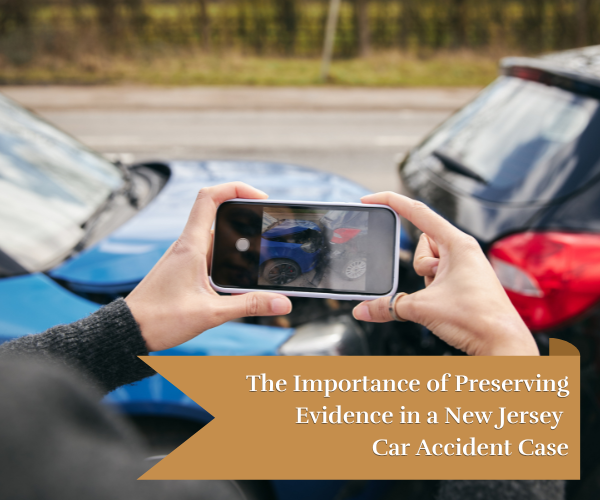
- Preserve all evidence. Photographs of the scene, vehicle damage, skid marks, road conditions, and your visible injuries. Dashcam footage, witness contact information, and the police report number.
- Document every call. Write down the name, number, and company of anyone who contacts you. Note the date, time, and what was discussed. These records matter.
- Consult a NJ car accident attorney. Most car accident lawyers in New Jersey offer free consultations and work on contingency — meaning you pay nothing unless you recover. An attorney can communicate with both insurers on your behalf and prevent you from saying anything that damages your claim.
A Note on Your Own Insurer’s Cooperation Clause
Your own policy almost certainly contains a cooperation clause. This means you must respond to your own insurer’s reasonable requests — but it does not mean you must provide a recorded statement on their timeline, without legal counsel, and without understanding the purpose of the recording.
You have the right to consult an attorney before any recorded interview, even with your own carrier. If your PIP insurer is requesting a statement, contact a New Jersey personal injury attorney first. They can be present on the call or advise you on what questions you must answer and which fall outside the scope of the cooperation clause.
Failing to cooperate with your own insurer without legal justification can give them grounds to deny coverage. Failing to cooperate with the other driver’s insurer has no such consequence. Know the difference.
What Happens After You Decline
Nothing bad. The other driver’s insurer will continue to process the claim. They have other sources of information: the police report, photos, their insured’s statement, medical records you authorize them to access later, and any litigation discovery if the case proceeds to suit. Your refusal to give a recorded statement does not stall your claim — it simply removes a weapon from the adjuster’s toolkit.
If the insurer argues that your refusal means they cannot process the claim, that is a pressure tactic. New Jersey insurance regulations — overseen by the New Jersey Department of Banking and Insurance (DOBI) — require insurers to conduct reasonable investigations and act in good faith. A claimant’s refusal to provide an optional recorded statement does not excuse bad faith delay.
If an insurer retaliates by denying or delaying your claim unreasonably, that is a separate legal issue worth discussing with an attorney. Learn more about how NJ car accident settlements are negotiated and what fair compensation looks like.
Quick-Reference: The 5 Rules
- Never give a recorded statement to the other driver’s insurer. You have no legal obligation to do so.
- Never discuss your injuries before a medical evaluation. You do not know their full extent yet.
- Never speculate about fault, speed, or distractions. “I think,” “probably,” and “maybe” become facts in a claim file.
- Decline politely and firmly, then end the call. You owe them no explanation.
- Contact a NJ car accident attorney before any recorded statement — including with your own insurer.
Got a Call from an Insurance Adjuster?
Do not answer questions before speaking with a New Jersey car accident attorney. Most consultations are free, and you pay nothing unless you win.