After a car accident in New Jersey, most people focus on two things: getting medical help and figuring out what happens next with their car. Evidence is usually the last thing on their mind.
But evidence is often what determines whether an injury claim succeeds — and how much compensation an injured victim ultimately receives.
Insurance companies do not simply take a victim’s word for what happened. They investigate. They review records. They look for reasons to reduce or deny a claim. Without the right documentation, even a serious injury case can be undervalued or disputed.
If you have been injured in a New Jersey car accident and are wondering what affects the value of your case, the answer often comes back to the same thing: what you can prove.
This guide walks through the types of evidence that matter most in a New Jersey car accident claim, why each one is important, and what happens when documentation is missing or incomplete.
Why Evidence Matters in a New Jersey Car Accident Case
Every car accident claim is a story told through documents, records, and facts. Insurance adjusters do not know what happened at the scene. They were not there. What they know is what the evidence shows them.
Strong evidence accomplishes several things:
- It establishes that the other driver was at fault
- It connects your injuries directly to the accident
- It shows how seriously your life has been affected
- It makes it much harder for the insurance company to minimize or dispute your claim
Weak or missing evidence does the opposite. It creates openings for insurers to argue that the accident was not serious, that the injuries were pre-existing, or that the victim shares responsibility for the crash.
New Jersey follows a modified comparative negligence system, meaning that if you are found partially at fault, your compensation is reduced proportionally. Insurance companies know this — and they actively look for ways to shift blame. Evidence that clearly establishes what happened protects you from those tactics.
Evidence at the Scene: What to Collect Immediately
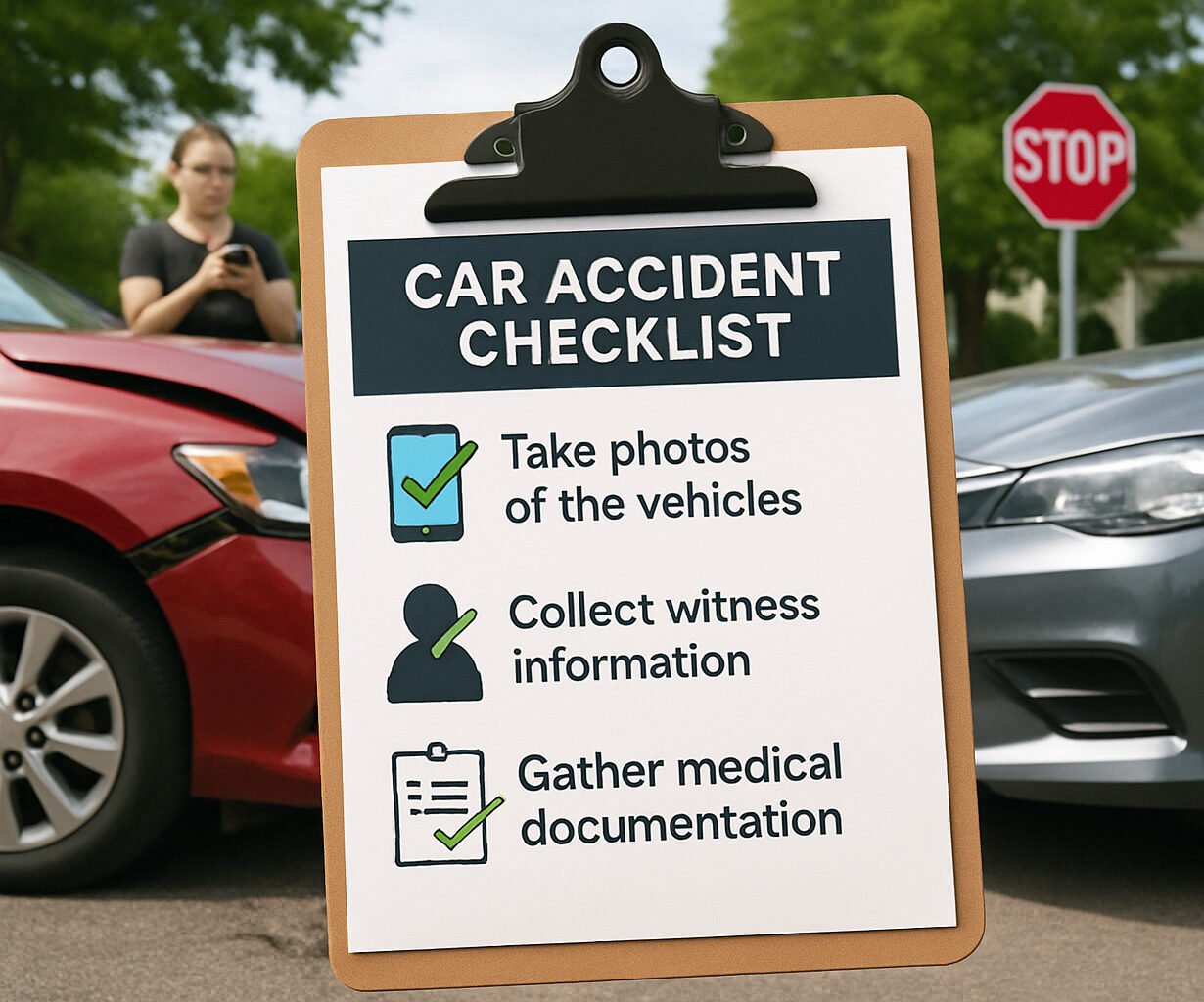
The moments right after a collision are often chaotic. But if it is safe to do so, gathering information at the scene can significantly strengthen a future claim.
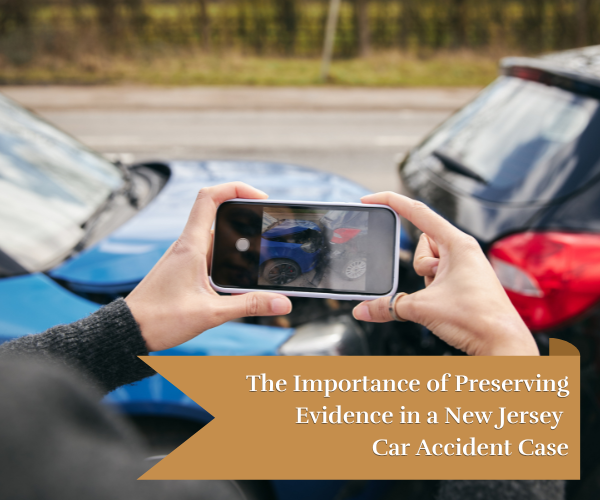
Photos and Video
Photographs are among the most powerful forms of evidence in a car accident case. They capture what words struggle to describe.
At the scene, document:
- Vehicle damage from multiple angles
- The position of all vehicles involved
- Road conditions, weather, and visibility
- Skid marks, debris, or other physical evidence
- Traffic signs, signals, or crosswalks nearby
- Any visible injuries
If dashcam footage exists — whether on your vehicle or another driver’s — that video can be extremely valuable. Surveillance cameras at nearby businesses or intersections may also have captured the crash. This footage often disappears within days if not preserved promptly.
The Police Report
Calling the police after an accident is strongly advisable in New Jersey, especially when injuries are involved. The responding officer will complete an official accident report documenting:
- The date, time, and location of the crash
- The vehicles and drivers involved
- A preliminary assessment of fault
- Any traffic violations noted
- Witness names and contact information
Police reports carry significant weight with insurance companies. They provide an independent, official account of the accident that is difficult to dispute. A copy can typically be obtained through the local law enforcement agency or the New Jersey State Police within days of the crash.
Witness Information
Eyewitness testimony can be critical, especially when the other driver disputes what happened. People who saw the accident from outside the vehicles often have a clearer view of what occurred than the drivers themselves.
If witnesses are present at the scene, collect their:
- Full names
- Phone numbers
- Email addresses
Witnesses who seem willing to help may become unavailable days or weeks later. Securing their contact information early ensures that their accounts can be preserved.
The Other Driver’s Information
Before leaving the scene, gather the following from any other driver involved:
- Full name and address
- Driver’s license number
- License plate number
- Insurance company name and policy number
- Vehicle make, model, and color
This information is essential for filing an insurance claim and may become relevant if a lawsuit becomes necessary.
Medical Evidence: The Foundation of an Injury Claim
In any personal injury case, the most important evidence is usually medical. Medical records connect the accident to the injuries — and they document how seriously those injuries affected the victim’s life.
Seeking Treatment Promptly
One of the most common mistakes accident victims make is delaying medical care. Some people feel shaken but not in serious pain immediately after the crash. Others want to wait and see if symptoms improve on their own.
This is almost always a mistake for two reasons.
First, many injuries — including whiplash, herniated discs, and soft tissue damage — do not produce their worst symptoms until 24 to 72 hours after the collision. Waiting means the injuries worsen without documentation.
Second, insurance companies treat gaps between the accident and the first medical visit as a red flag. If injuries were truly serious, they argue, the victim would have sought care immediately. A delay — even of a few days — can be used to suggest that the injuries were minor or unrelated to the crash.
Seeking medical attention on the day of the accident, or as soon as possible, creates a clear and timely record.
Emergency Room and Urgent Care Records
For serious accidents involving significant pain, loss of consciousness, head injuries, or difficulty moving, emergency room treatment creates the most immediate documentation. ER records establish:
- The initial diagnosis
- Imaging ordered (X-rays, CT scans, MRIs)
- Treatments administered
- The physician’s initial assessment of injury severity
Even for less severe accidents, an urgent care visit or same-day appointment with a primary care physician creates a dated medical record that ties the injuries to the accident.
Specialist and Follow-Up Treatment
Ongoing medical care builds the foundation of a stronger claim. Treatment records from orthopedic specialists, neurologists, physical therapists, chiropractors, and pain management physicians all document:
- The nature and progression of injuries
- Treatment plans and procedures performed
- Recommended future care
- Physician assessments of limitations and prognosis
Insurance companies review this documentation carefully. The more consistently treatment is pursued, the harder it becomes to argue that the injuries were minor or that the victim failed to take their recovery seriously.
Gaps in treatment — periods of weeks or months without medical visits — can weaken a claim. Insurers may argue that the victim’s condition had improved or that the ongoing treatment was unrelated to the accident.
Imaging and Diagnostic Records
MRIs, CT scans, and X-rays provide objective, visual evidence of physical injury. Unlike patient-reported symptoms, imaging cannot easily be dismissed as exaggeration. A herniated disc visible on an MRI, a fracture confirmed by X-ray, or brain abnormalities identified on a CT scan become concrete proof that the accident caused real, documented harm.
Prescription Records
Medications prescribed after the accident — pain management drugs, anti-inflammatories, nerve medications, muscle relaxants — serve as additional documentation of the injury’s severity and the ongoing need for treatment.
Evidence of Financial Losses
A strong claim requires more than proving injury. It requires proving how the injury affected the victim financially.
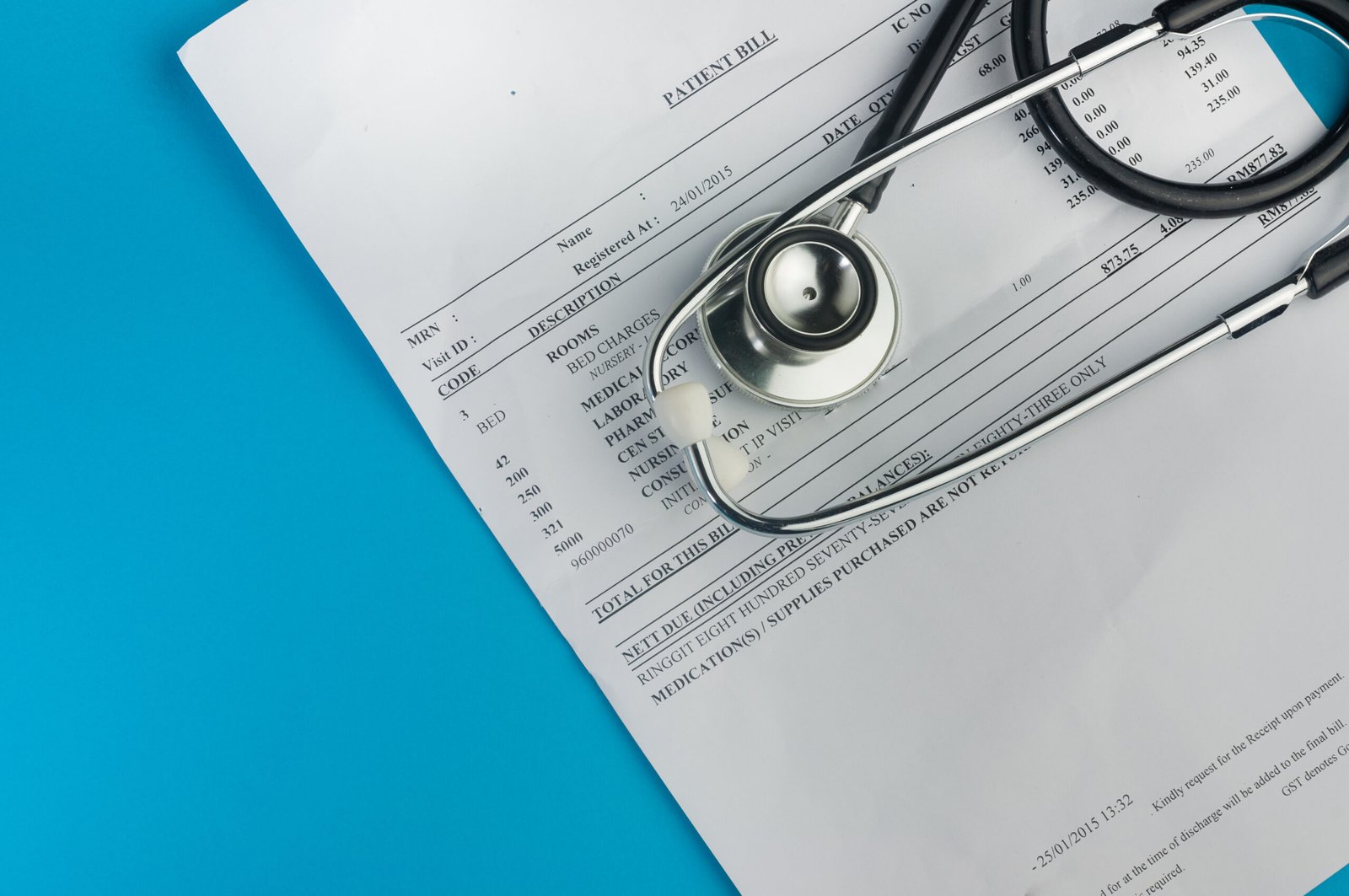
Medical Bills and Invoices
Every bill related to accident-related treatment should be retained and organized:
- Emergency room and hospital charges
- Ambulance fees
- Specialist office visits
- Physical therapy and rehabilitation
- Prescription costs
- Medical equipment (braces, crutches, compression garments)
- Mileage to and from medical appointments
These bills establish the economic foundation of the claim. They demonstrate real, measurable costs incurred because of the accident.
Proof of Lost Income
When injuries prevent someone from returning to work — even temporarily — those lost wages are compensable. Documentation of income loss may include:
- Pay stubs or payroll records from before the accident
- A letter from an employer confirming missed days and the resulting lost income
- Tax returns for self-employed individuals
- Documentation of bonuses, commissions, or other income affected
If the injuries affect long-term earning capacity — for example, if someone in a physically demanding profession can no longer perform the same type of work — vocational experts and financial analysts may be needed to project future income loss.
Property Damage Records
Vehicle repair estimates and bills, rental car receipts, and documentation of any personal property damaged in the crash (a phone, glasses, equipment in the vehicle) all contribute to the full economic picture of the claim.
Evidence of Pain, Suffering, and Emotional Impact
Some of the most significant consequences of a car accident are not reflected in medical bills or pay stubs. Physical pain, emotional trauma, anxiety, depression, sleep disruption, and the inability to enjoy daily life are real — but they require their own form of documentation.
Personal Injury Journal
Many attorneys recommend that accident victims keep a daily or weekly journal beginning as soon as possible after the crash. This journal documents:
- Pain levels and where in the body pain is felt
- Sleep quality and disruptions
- Activities that can no longer be performed or must be modified
- Emotional struggles — anxiety, fear while driving, depression
- How injuries have affected family relationships, caregiving responsibilities, and social life
- Days when symptoms worsened or improved
A detailed, consistent journal creates a personal narrative of suffering that cannot be captured in medical records alone. It demonstrates to insurance companies — and juries, if the case goes to trial — that the accident’s impact extended well beyond the immediate physical injuries.
Mental Health Records
If the accident has caused anxiety, PTSD, depression, or other psychological effects requiring professional treatment, mental health records from a licensed therapist, psychologist, or psychiatrist document those conditions. Emotional injuries are compensable in New Jersey, but they must be supported by evidence.
Testimony from Family, Friends, and Coworkers
People who interact with the accident victim regularly can provide powerful testimony about how the injury changed their daily life. A spouse who has taken over household responsibilities, a coworker who has observed limitations at work, or a parent who can no longer play with their children the way they once did — these accounts add a human dimension that medical records alone cannot fully capture.
Expert Evidence in Serious Cases
In cases involving serious injuries, significant disputed liability, or large claims, attorneys often rely on expert witnesses to strengthen the case.
Accident Reconstruction Specialists
When fault is contested — especially in multi-vehicle accidents, intersection collisions, or crashes where the other driver disputes what happened — accident reconstruction experts can analyze the physical evidence to determine how the crash occurred. They examine skid marks, vehicle damage, road conditions, and other factors to reconstruct the sequence of events.
Medical Experts
Independent medical examiners or treating physicians may provide expert opinions on the nature of the injuries, the required treatment, the expected recovery trajectory, and whether the injuries are permanent. Their testimony becomes particularly important when insurance companies argue that injuries were pre-existing or unrelated to the accident.
Vocational and Economic Experts
In cases involving permanent disability or long-term impairment, vocational rehabilitation specialists and economists can project how the injury will affect the victim’s career and lifetime earning capacity. This evidence is often essential in serious cases where compensation must account for future financial losses.
 What Happens When Evidence Is Missing or Weak?
The absence of evidence does not necessarily mean a case has no value. But it almost always means it will be harder to prove — and the insurance company will use every gap to reduce what they offer.
Common consequences of missing or weak evidence include:
- The insurer successfully arguing that injuries were pre-existing or unrelated to the accident
- Reduced compensation for pain and suffering because there are no records documenting emotional impact
- Disputed liability resulting in a larger comparative fault reduction
- Lower overall settlement offers because the insurer calculates less risk if the case goes to court
An experienced New Jersey car accident attorney can often work with what is available — but the stronger the evidence, the stronger the negotiating position.
How an Attorney Helps Build and Preserve Evidence
Many accident victims do not realize how much evidence must be gathered — or how quickly some of it disappears.
Surveillance footage is typically overwritten within days. Witnesses become difficult to locate. Physical evidence at the scene is cleared. Medical records from multiple providers must be requested separately.
An experienced New Jersey car accident lawyer handles this process systematically:
- Sending preservation letters to businesses and municipalities before surveillance footage is erased
- Obtaining police reports, medical records, and billing documentation
- Coordinating with accident reconstruction specialists or medical experts when needed
- Identifying and preserving witness statements
- Building a comprehensive demand package that presents the evidence clearly and persuasively
Insurance companies are experienced at evaluating claims. Having legal representation that matches that experience — and that has built the evidence to support the claim — often makes a meaningful difference in how seriously a case is taken and what the final settlement reflects.
The Connection Between Evidence and Case Value
Evidence does not just determine whether you can make a claim. It determines how much that claim is actually worth.
If you are trying to understand the full picture of what your New Jersey car accident case may be worth — including how medical documentation, financial losses, pain and suffering, and insurance rules all factor into a settlement — this is a good place to start:
How Much Is My NJ Car Accident Case Worth?
And if you are wondering how long the process typically takes from the accident to a final settlement, the timeline often depends heavily on how complete the evidence is and how long medical treatment continues:
How Long Does a Car Accident Settlement Take in NJ?
Q&A
Question: What is the most important evidence to collect right after a car accident in New Jersey?
Short answer: Photographs of the scene, vehicle damage, road conditions, and any visible injuries are among the most immediately useful. Getting the police report, collecting the other driver’s insurance and license information, and securing contact details from any witnesses are also critical first steps. If you are injured, seeking medical care the same day creates a timely record that ties your injuries directly to the accident.
Question: How does medical documentation affect the value of my NJ car accident claim?
Short answer: Medical records are the foundation of most injury claims. They connect your injuries to the accident, document the severity of those injuries, and establish what treatment was necessary. Consistent, well-documented treatment — including specialist visits, imaging, therapy, and physician recommendations — makes it much harder for insurance companies to argue that injuries were minor or unrelated to the crash. Gaps in treatment are frequently used to reduce settlement offers.
Question: Does keeping a personal injury journal actually matter?
Short answer: Yes, more than most people expect. Medical records capture diagnoses and treatment, but they rarely reflect the full daily impact of living with pain, limited mobility, anxiety, or sleep disruption. A consistent personal journal documents those experiences over time and provides a personal narrative that can support pain and suffering claims. It also helps attorneys and juries understand how the accident changed your life in ways that a medical chart does not show.
Question: What if I did not collect evidence at the scene or waited to see a doctor?
Short answer: Missing early evidence makes a case harder to prove, but it does not necessarily eliminate it. An attorney can often work to reconstruct what happened through police reports, witness statements, medical records, and other available documentation. However, the sooner steps are taken to preserve evidence and document injuries, the stronger the case. If you are still early in the process, seeking medical care now and speaking with an attorney about what can still be gathered is the right next step.
Question: Do I need an attorney to collect evidence for my car accident claim in New Jersey?
Short answer: You are not legally required to have an attorney, but the evidence-gathering process is more complicated than most people realize. Surveillance footage disappears within days. Witnesses become unreachable. Medical records from multiple providers must be formally requested. Insurance companies have experienced claims teams evaluating every case. An attorney handles this process systematically, preserves evidence that would otherwise be lost, and builds the kind of documented claim that produces stronger settlement outcomes.
Free Case Evaluation
If you were injured in a New Jersey car accident and want to understand what evidence supports your claim — and what your case may be worth — the Law Office of Raffi T. Khorozian P.C. offers free consultations with no obligation.
Call 24/7: (888) 658-4284
With 31 locations across New Jersey, same-day appointments available, and home or hospital visits at no cost, our team is ready to help you understand your rights and next steps.
Most lawyers charge 33 1/3%. We charge only 25%.